
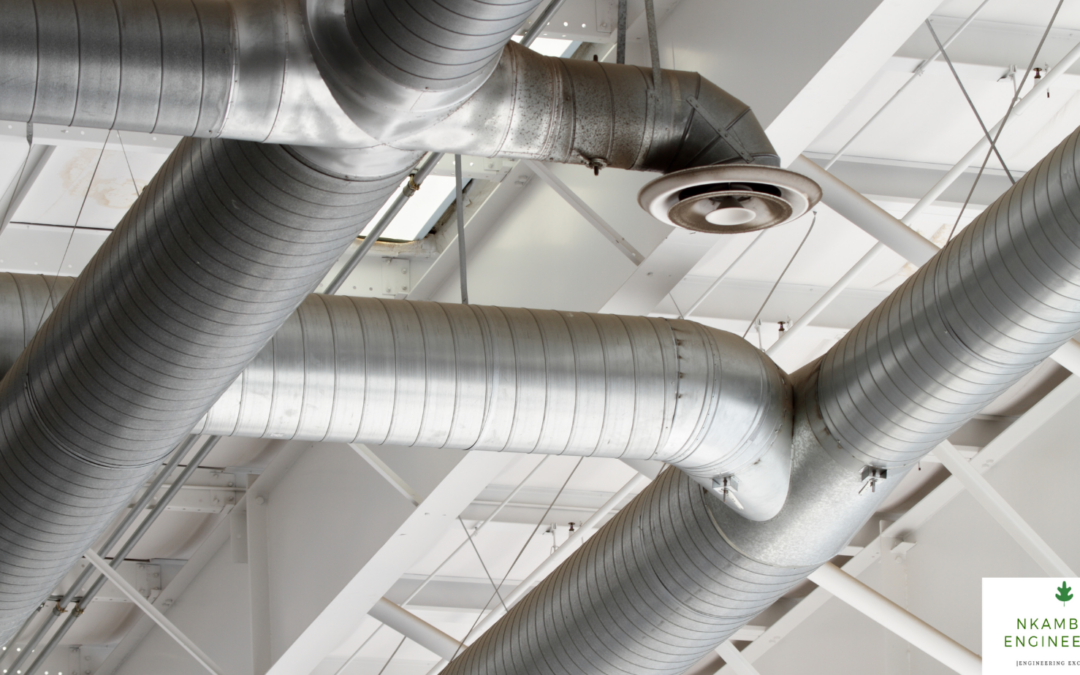
Ventilation plays a crucial role in maintaining safe working environments by ensuring the movement of air within a space. Proper ventilation helps introduce fresh air, remove contaminated air, and disperse hazardous gases or vapors to prevent dangerous concentrations from forming.
The Role of Ventilation in Gas Dispersion
When gases or vapors are released into the atmosphere, they gradually dilute through dispersion or diffusion until their concentration drops below the lower explosive limit (LEL). The effectiveness of this process depends significantly on the type and efficiency of the ventilation in place.
In hazardous environments, ventilation directly influences the classification of zones, determining whether an area is considered safe or requires additional safety measures.
Types of Ventilation
There are two primary types of ventilation:
- Natural Ventilation
Natural ventilation occurs due to environmental factors such as wind movement and temperature gradients. This passive method can be effective in open spaces but may be insufficient in enclosed areas where air circulation is limited. - Artificial Ventilation
Artificial ventilation involves forced air movement using fans, extractors, or mechanical ventilation systems. This method provides greater control over airflow and is essential in enclosed spaces where natural ventilation is inadequate.
Quantifying Ventilation in Enclosed Spaces
Traditionally, ventilation in enclosed areas has been measured by the number of air changes per hour. However, this approach does not consider the size of the enclosure or the volume of hazardous substances released. A small release in a large space may require a different ventilation strategy compared to a significant release in a confined area.
Research Findings on Ventilation and Safety
According to Research Report RR993, maintaining ventilation levels that limit the average concentration of gases to 25% of the lower flammable limit (LFL) is generally sufficient to classify an area as Zone 2. However, this guideline only addresses overall ventilation effectiveness and does not account for localized variations in airflow.
To ensure comprehensive safety, 25% of the LFL should be regarded as the minimum requirement. Additional factors, such as airflow distribution and localized accumulation of hazardous substances, must also be considered to achieve adequate ventilation and prevent risks.
Conclusion
Effective ventilation is a key factor in determining area classification and ensuring workplace safety. Whether through natural or artificial means, proper ventilation minimizes the risk of hazardous gas buildup and helps maintain compliance with safety standards. By understanding the principles of ventilation and applying best practices, industries can enhance workplace safety and reduce the risk of explosions or toxic exposure.